
The Science of Aftercare: Understanding the “Post-Sex Drop” & Emotional Recovery

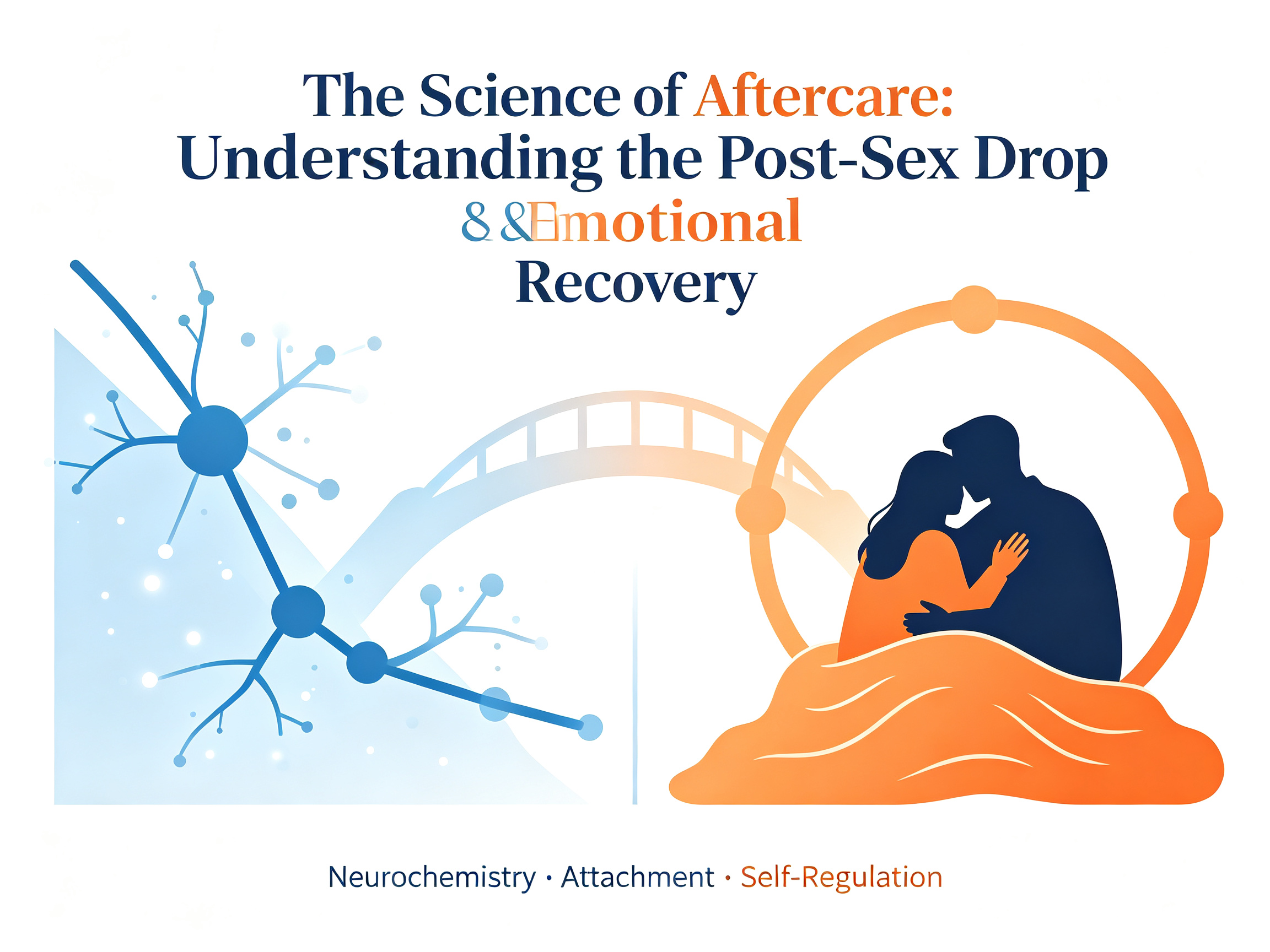
The Science of Aftercare: Understanding the “Post-Sex Drop” & Emotional Recovery
Have you ever experienced a sudden wave of sadness, unexplained tears, irritability, or emotional emptiness immediately following a deeply satisfying sexual experience? If so, you are far from alone.
In sexual medicine and psychology, this phenomenon is known as Post-Coital Dysphoria (PCD)—often colloquially termed the “post-sex drop.” Far from signaling that something is wrong with your feelings or your relationship, this reaction is a natural neurochemical rebound. Recognizing how our nervous system transitions out of high arousal is why practicing intentional aftercare is essential.
1. The Neurochemical Rollercoaster: What Causes the “Drop”?
During physical intimacy and orgasm, your brain unleashes a massive cascade of neurochemicals:
- Dopamine: Drives reward, anticipation, and heightened focus.
- Oxytocin: Promotes bonding, empathy, and emotional vulnerability.
- Endorphins: Provide natural pain relief, euphoria, and deep relaxation.
However, once climax occurs, the brain rapidly produces prolactin (a hormone that suppresses dopamine and triggers the refractory period) while endorphin levels taper off quickly. For many people, this abrupt biochemical withdrawal sends a signal of sudden vulnerability or melancholy to the central nervous system.
2. The 3 Pillars of Intentional Aftercare
Aftercare is the intentional practice of caring for yourself and your partner physically, emotionally, and mentally following intimate activity. It grounds your nervous system as it shifts from the sympathetic state (high arousal) back to the parasympathetic state (rest and digest):
1. Physical Regulation
Replenishing fluids, regulating body temperature with cozy blankets, managing urinary hygiene, and eating a light snack to stabilize blood sugar.
2. Emotional Reassurance
Affirming mutual safety, expressing appreciation, offering gentle non-sexual touch (cuddling, back rubs), or respecting quiet space if needed.
3. Mental Grounding
Checking in on comfort levels, debriefing what felt great, and releasing any lingering performance anxiety or vulnerability without judgment.
3. Aftercare Applies to Solo Pleasure Too
Aftercare is not exclusively for partnered encounters. If you experience an emotional drop or fatigue following solo masturbation, self-aftercare works wonders:
- Drink a glass of cool water and put on comfortable, warm clothing.
- Avoid jumping straight into high-stress tasks or endless social media doomscrolling.
- Practice 2–3 minutes of slow, deep breathing to ease muscle tension.
📋 Quick Checklist: Building Your Aftercare Routine
- Pre-Plan Hydration: Keep water bottles and tissues by the bedside table beforehand.
- Communicate Your Style: Let your partner know whether you prefer close cuddling, debriefing conversations, or 10 minutes of quiet space to recalibrate.
- Normalize the Emotions: If tears or sadness appear, acknowledge them without panic: “My nervous system is just resetting, I’m okay.”
4. Conclusion: Transforming Vulnerability into Connection
Sexuality involves profound physical and emotional exposure. By acknowledging the neurological reality of the post-sex drop and integrating thoughtful aftercare into your routine, you transform post-intimacy vulnerability into deeper trust, safety, and mutual care.