
Decoding Desire: The Science of ResponsiveArousal and the Dual Control Model

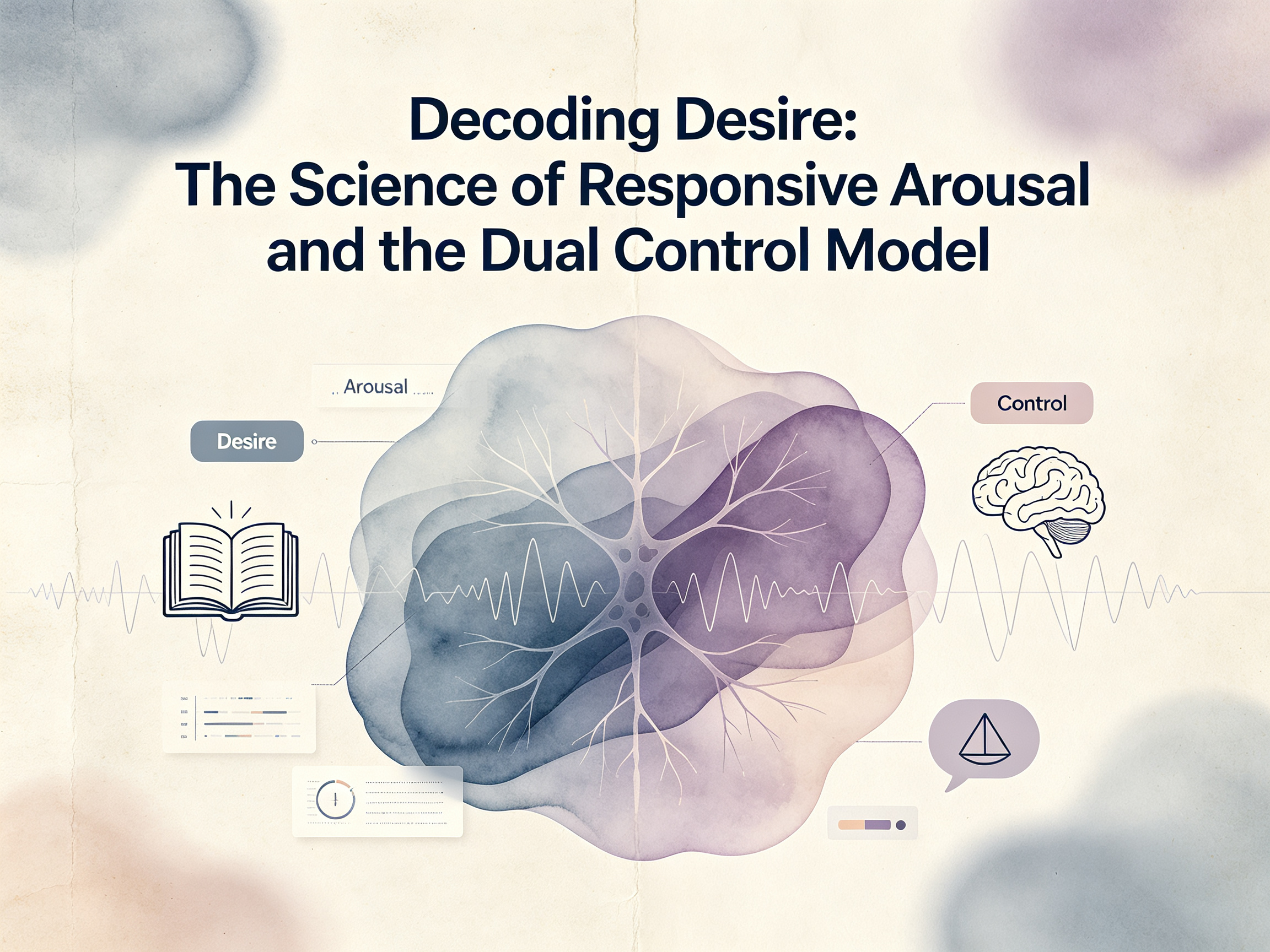
Decoding Desire: The Science of Responsive Arousal and the Dual Control Model
One of the most widespread sources of anxiety in intimate relationships is the belief that sexual desire should always strike like lightning—spontaneous, effortless, and intense. When that initial spark shifts or slows down, many assume their relationship is failing or that their own body is “broken.”
Modern neurobiology and sex research tell a completely different story. Desire is not an on-or-off switch; it is a complex cognitive and physiological response shaped by context, safety, and individual neurochemistry.
1. Spontaneous vs. Responsive Desire: Normalizing the Spectrum
Pioneering clinical sex researchers categorize human desire into two primary models:
- Spontaneous Desire: Feeling an out-of-the-blue urge for sexual intimacy before any physical stimulation has occurred. This is common in the early stages of relationships (the “honeymoon phase”).
- Responsive Desire: Desire that emerges in response to pleasure, emotional intimacy, touch, or relaxing environmental cues. Physical arousal often precedes mental desire in this state.
2. The Dual Control Model: The Gas and the Brakes
Developed by neuroscientists John Bancroft and Erick Janssen at the Kinsey Institute, the Dual Control Model explains that sexual response relies on two independent neurological systems working simultaneously:
🟢 The Sexual Excitation System (The Accelerator)
Scans the environment for sexual stimuli (visuals, scents, romantic connection, emotional safety) and sends “turn on” signals to the brain and body.
🔴 The Sexual Inhibition System (The Brakes)
Scans for potential threats, stress, performance anxiety, fatigue, shame, or relationship conflict and sends “shut down” signals to protect you.
When someone struggles with low desire, the solution is rarely to “step harder on the gas” (e.g., trying novel gimmicks). In the vast majority of cases, the key is identifying and removing what is pressing down on the brakes.
3. Common Modern “Brakes” and How They Impact Arousal
- Chronic Stress & Cortisol: The brain perceives chronic work stress, financial pressure, or burnout as physical threats, prioritizing survival over reproduction.
- Body Image & Performance Anxiety: Self-monitoring during intimacy (“spectatoring”) activates the inhibition system, preventing the brain from focusing on physical sensations.
- Unresolved Relational Tension: Micro-conflicts, unexpressed emotional resentment, or unequal distribution of domestic labor directly reinforce emotional brakes.
💡 Practical Strategies to Recalibrate Your Intimate Health
- Shift Focus to “Low-Stakes” Physical Touch: Engage in massage, hugging, or cuddling without the expectation that it must escalate to sex. This releases the brakes of performance pressure.
- Cultivate a Calming Environment (Context): Reduce distractions, dim lighting, minimize screen time before bed, and ensure privacy to signal safety to your nervous system.
- Communicate Your Style Openly: Let your partner know if you operate on responsive desire so you can collaborate on building warm-up rituals rather than waiting for an elusive spontaneous spark.
4. Conclusion: Redefining Intimacy on Your Terms
Releasing guilt is the most powerful catalyst for a healthy sex life. Understanding that desire fluctuates based on your nervous system’s perception of safety allows you and your partner to approach intimacy with curiosity, patience, and mutual respect.